Spring Deer and Rusty Riders: The Hazard Nobody Warns You About.
A quick note before we get into it. I know this post runs long. I have lost too many friends on bikes, and I have watched too many good riders get caught off guard by a deer. If anything in here keeps even one of you from becoming another one of those stories, every word is worth it. Read it. Share it. Ride smart.
Every rider knows the fall months, October and November, are when things get dicey with deer. That's the rut, which is deer mating season, when bucks are chasing does across every back road and neither of them are looking both ways. The woods are full of motion, and you can feel every ride getting more cautious. What almost nobody talks about is the other peak. The quieter one. The one that's starting right now.
May and June are the secondary peak for deer vehicle collisions, and for motorcyclists in Upstate New York, that might actually be the more dangerous window. Let me break it down.
The numbers are uglier than you think
New York State logged roughly 32,000 reported deer crashes in 2024, according to the University at Albany's Institute for Traffic Safety Management and Research. Insurance data from State Farm and others puts the real number closer to 65,000 to 70,000 a year when you count the strikes that never get reported to police. That is one reported crash every fifteen minutes, statewide, and many more that just get written up as body shop estimates.
For riders, the math is worse. A Michigan State University study looking at a nine-year window of crash data found that 8.5% of all reported motorcycle crashes involved a deer. Of the 2,445 riders and passengers caught up in deer strikes during that study, 509 were severely injured or killed. National data from the Insurance Institute for Highway Safety has shown that in at least one year, every single deer-related traffic fatality was a motorcyclist. Not most. All.
A cage hits a deer, and the driver files a claim. A rider hits a deer at 55 on Route 28, and the story ends very differently.
Why spring is sneaky and dangerous
October and November get all the press because of the rut. Here's what spring brings, and honestly, it's worse.
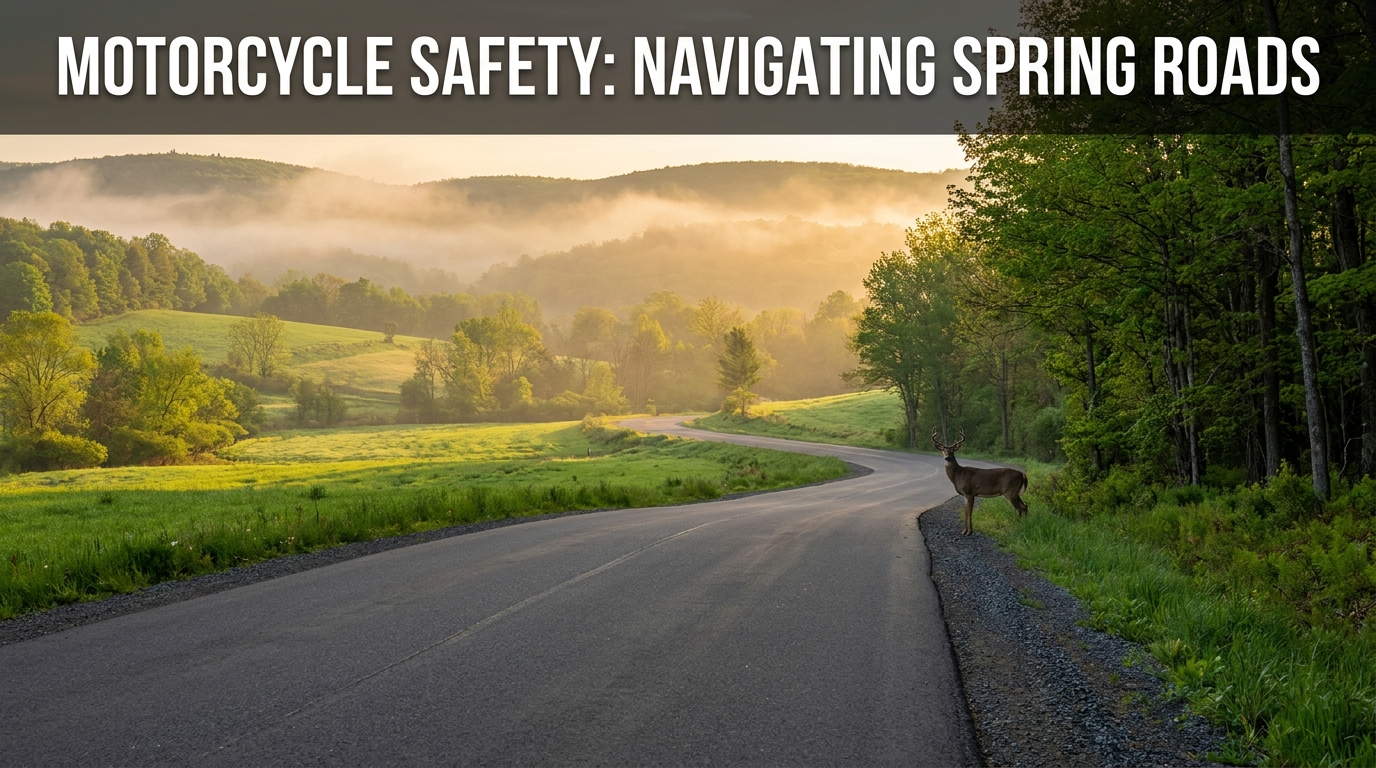
The does that were bred last fall are now dropping fawns and pushing last year's yearlings out of their territory. Those yearlings are the problem. They are essentially deer teenagers. No road sense, no fear, no idea what a motorcycle is, and they wander into traffic in daylight hours when a mature deer would never be out. If you see one small, confused-looking deer in May, the second one is already in motion.
The grass along the shoulders is coming in fast. That new green is pure candy for deer. They'll graze right up against the pavement in the early morning and at dusk, especially along the field edges that make up half the back roads in Otsego County.
Then there's us. Most of us have been off the bike since November. Reflexes are dull, technique is rusty, and the first few rides of the season are when even experienced riders overcook corners and target fixate. The exact moment a yearling buck launches out of a hedgerow on Route 205 is not the moment you want to discover your muscle memory needs a refresher.
Spring also means early-season road hazards. Winter sand and salt still pooled in the curves. Pothole season. Cold morning pavement that looks dry but isn't quite. All of that robs you of the grip and the split-second reaction time you need when a deer is in your lane.
When they move in the spring
Deer are crepuscular, which is a fancy word for active at dawn and dusk. In April through August, national crash data shows the dangerous window shifts later. Most animal collisions happen between 8 p.m. and midnight. That is exactly when a lot of us like to do evening rides around Goodyear Lake or out toward Cooperstown to catch the sunset.
I'm not saying don't ride. I'm saying know what window you're in and ride accordingly.
What to actually do when you're about to hit one
You have one second, maybe less. If you're this close, you're probably going to hit the deer. Your job now is to survive it in the best position possible. So here's what you do.
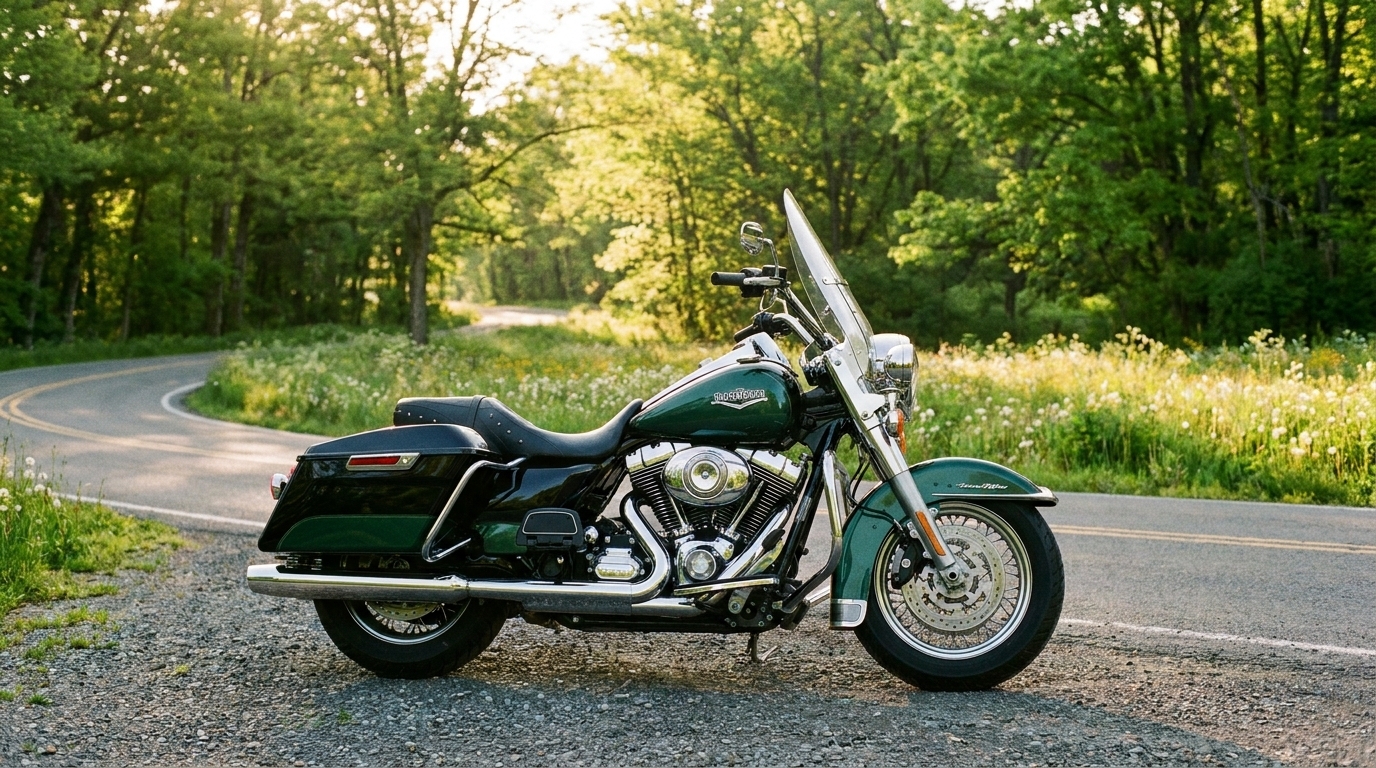
Brake straight and brake hard. Both brakes, progressive but aggressive. A big cruiser laid over in a panic swerve on cold spring pavement is going down. A cruiser, straight up and slowing fast, has a fighting chance. Every mile per hour you scrub off before impact is energy your body doesn't have to absorb. Going from 55 to 35 before you hit is a completely different crash than hitting at 55.
Square the bike up. If you're leaning in a corner when the deer appears, stand the bike up before contact. Impact while leaning will almost always put you down. Impact while vertical gives you a real shot at staying upright, especially with a heavy touring bike.
Look where you want to go, not at the deer. Target fixation is how riders end up dead center on an animal they had room to miss. Pick your line, whether that's the gap behind the deer or the shoulder, and lock your eyes on the exit.
Aim behind the deer, not at it. You are not trying to hit the animal's rear end. You are aiming for the empty road behind it, hoping to miss entirely. A deer crossing the road is moving forward, which means the space behind it is opening up, and the space in front is closing off. Riders who lock their eyes on where the deer is end up hitting where the deer will be. Point the bike at where the deer just was, and you have your best shot at clearing it.
Stay heavy on the brakes right up to contact. At the same time, get into an athletic position on the bike. Stand slightly on the pegs, bend your knees and elbows, and keep your grip firm but not locked. You want to be a spring, not a rigid plank, and you want to be slowing down until the very last instant.
Do not jump off the bike. I know it feels like the right move. It isn't. Separating from the bike at speed means you are now a human projectile with no protection, hitting the pavement. Riders who stay with the bike as long as possible statistically do better. The bike can absorb energy. You can't.
Do not hit the horn at the last second. Deer freeze. Some of them actually bolt toward the noise. The horn is for three seconds out, not three feet out. Once you're inside the reaction window, focus on the bike, not the animal.
If you go down
Stay down for a second and assess. Adrenaline will have you on your feet trying to walk it off before you realize your collarbone is in two pieces. Breathe. Move your fingers and toes before you move anything else. If something hurts sharply and specifically, stay put and call for help.
Get yourself to the shoulder if you can. A rider in the middle of a rural road is a second accident waiting to happen. If you're mobile, get to the ditch side and stay visible.
Protect the scene. Turn the bike's hazards on if you can reach them. If you have a triangle or flares in your kit, set them out. Most of us don't carry those. Even hi-vis gear laid on the road as a marker helps.
Call 911. Yes, even for a deer. In New York, larger animal strikes are reportable to police, and you want the incident documented for your insurance claim and for any injury follow-up. You also want the responding officer to dispatch DEC if the animal is down and suffering or if it's still a road hazard.
Do not approach the deer. A wounded deer can weigh 150 pounds, has sharp hooves, and will kick and thrash in a full panic. People get hurt worse walking up to the animal than they did in the impact. Let the officer handle it.
Document everything at the scene. Photos of the bike, the road, the deer, if it's safe, skid marks, and the location. Get the responding officer's badge number and the incident number. If there are witnesses, get names and numbers. Do all of this before the adrenaline fades, because you will not remember the details two hours later.
Know what New York allows. Under Environmental Conservation Law 11-0915, you can legally keep a deer killed by your vehicle, but only if you report the strike within 24 hours and the responding officer issues you a carcass tag. Do not try to finish off an injured deer yourself. That part is illegal. None of it matters if you're hurt. Health first, paperwork second.
The gear that actually pays off in this scenario
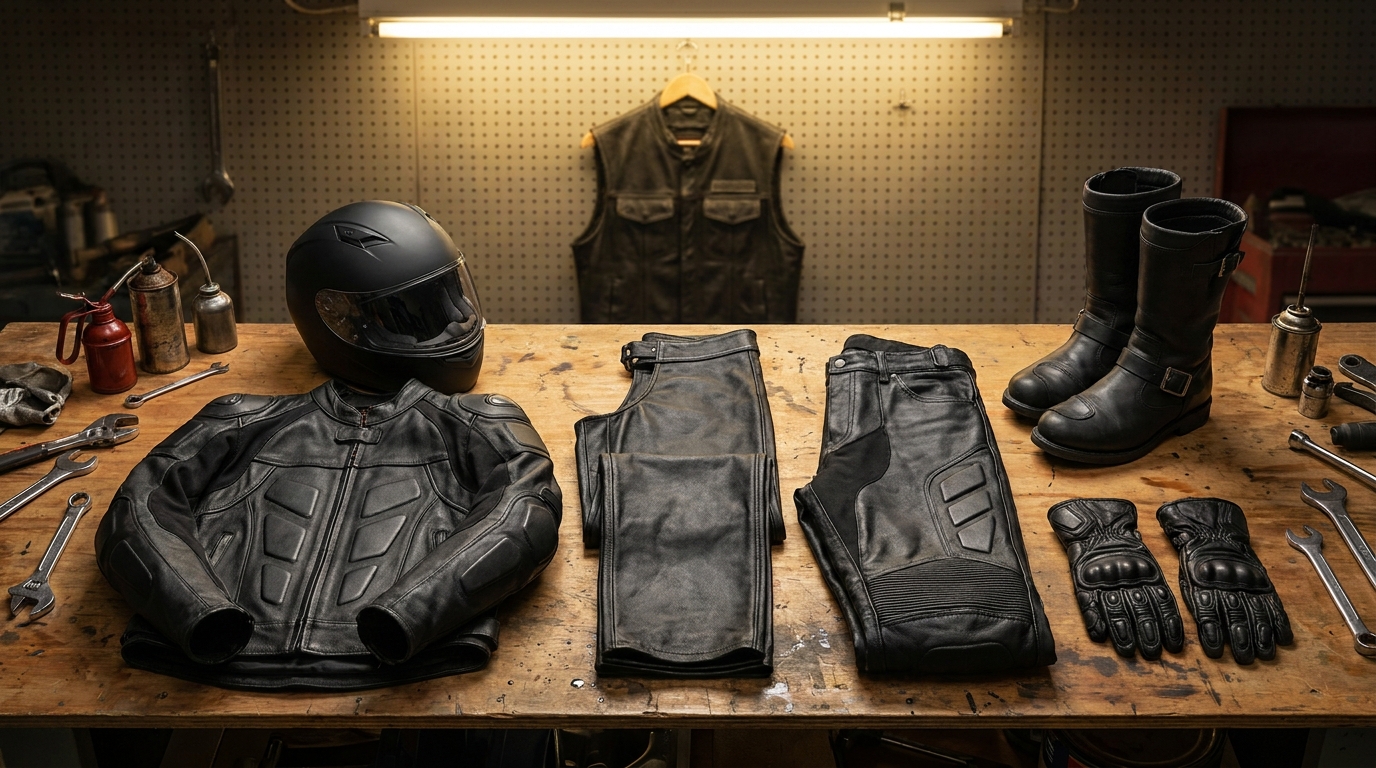
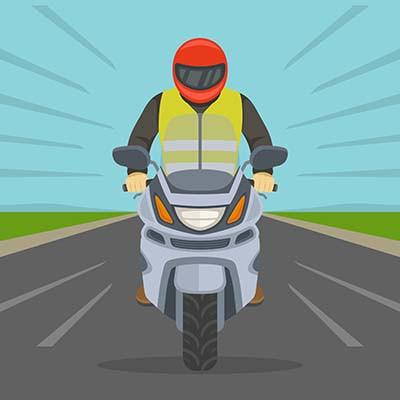
A full face helmet dramatically improves your odds in a deer strike. Open-face and half-helmet riders take the worst facial, dental, and eye injuries in these crashes. A full face is the only one that actually covers your face. If you ride back roads in deer country at dawn or dusk, please wear one. I know it isn't the cruiser look. It's the living look.
An armored jacket with shoulder, elbow, and back protection could be the difference between walking away and going to the hospital. Spring weather is finally warm enough to ride in real gear without cooking, so there's no excuse to be out there in a tee shirt in May.
Real riding boots that protect the ankle. A deer strike almost always involves the bike going down on a leg. Running shoes will not save you.
Real riding pants or chaps. Denim shreds like tissue paper in a slide, and a deer strike almost always puts the bike on its side with your legs underneath. Armored riding pants with knee and hip protection are the gold standard. If chaps over jeans are more your style, go leather and go thick. Anything is better than bare denim on pavement.
Gloves with knuckle protection. Your hands are always going to hit the ground first.
This is the gear that takes a deer strike from a funeral to a bad story you tell in the parking lot next Saturday. Wear it.
How to ride through spring deer country
Sweep your eyes along the ditches and the tree line, not just the pavement. You are looking for a flick of white, an ear twitch, a shift of color against the brush. You will rarely see a whole deer in time. You will see a piece of one, and that is your warning.
Assume the second deer. If one crosses, there is almost always a sibling or a doe right behind. The most dangerous moment is two seconds after the first deer clears your lane.
Slow down on any road where the posted deer crossing signs are up. DOT puts those there because somebody got hurt, not as decoration.
Better yet, hit an empty parking lot first and go back to basics. Practice your hard braking until it feels right again, run some figure eights to wake up your counter steering, and get your head scanning the way it used to. Then scrub the first few rides of the season off on a short, familiar loop before you commit to a 200-mile day. Your future self, the one who just had a yearling step out in front of you, will thank you.
Clean your face shield at every gas stop. The bugs are already thick. Low light plus a smeared shield is how near misses become crashes.
Spring riding is back. Enjoy it.
The hills are greening up, the twisties are finally dry most days, and the Rider Nation calendar is about to fill up with events from now through October. This is the reward for surviving another Upstate winter. The deer are part of the deal we make.
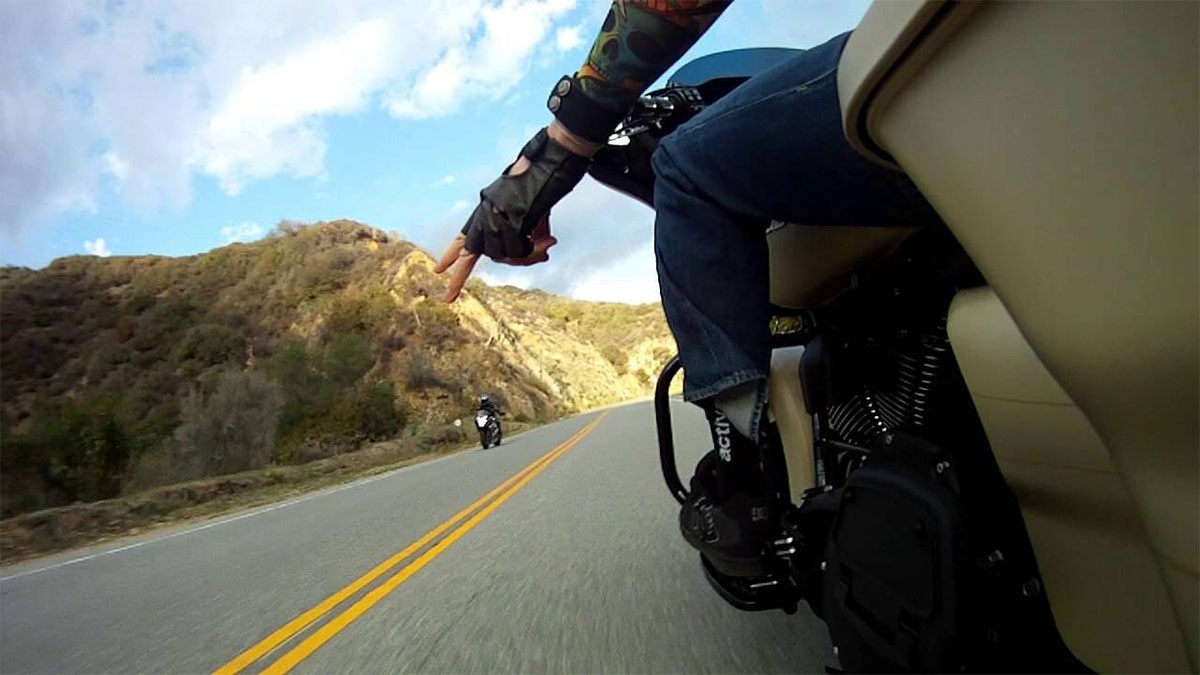
Ride smart. Ride awake. Eyes on the ditches, not just the pavement. And if you see a Road King with too much chrome waving at you with two fingers down, you know the one, send it back. Safe rides, all season.
-Chris
Comments
No comments yet. Be the first to share your thoughts.
Leave a comment